Showing posts with label seeds. Show all posts

14 September 2009

The flavor of frost

This is a gorgeous time of year, the temperatures have cooled off, and the mosquitoes, blackflies, biting midges, deerflies, and horseflies have disappeared with the heat, which makes a huge difference in our ability to enjoy the garden, and outdoor activities. We even had our first stargaze in quite a few months, dreaming up at the night sky without being eaten alive!

We did have our first major frost on September 9th, dawn broke to a dusting of fine white frost over the garden and fields. But we were prepared, and had covered the tender crops: peppers, tomatoes, ground cherries, a late basil crop, and even a pair of flowering fennel plants, hoping for some fennel seed. The frost spelled the end for the winter squash, pumpkin and cucumber vines, but the zucchini bushes showed real vigor, only burning the tallest leaves and not damaging the crown or small fruits. The last bean crop was also frosted, so we harvested the last of the green beans, and have been feasting on them, getting our fill of the fresh crop knowing it will be canned or fermented from now on.

The frost also marked the end of our market garden crops, which is more of a relief than a disappointment, we did as well as we could this year, and it is good to be able to focus all of our energies on our own harvest and winter preparation.

The bulk of our tomatoes, tomatillos and ground cherries are just ripening now, so we will keep them protected from frost for another 3-4 weeks before bringing in the remaining green fruits to ripen indoors. So my tomato sauce, salsa and chutney canning fest has begun. I'm also drying some ground cherries, they make nice little "raisins" for baked goods, with that unique pineapple flavor.
The sunflowers have indeed bloomed in time to make seeds, I always forget how frost hardy they are. We are going to experiment with de-hulling the seeds this fall/winter.

My own accidental hybrid "Sweet Curry" kabocha type winter squash, ripening in the dappled shade of the frosted vines. These will have to be brought in before the next frost, without the sheltering umbrella of leaves, the squash fruits would be damaged by a frost.

The popcorn is ready to harvest, the kernels mostly dried on the cob. I husk them right away, then store them in a large onion bag and let them continue drying for a few weeks before shelling the cobs.

A late summer fruit, Wild Raisins are ripening. They have a date-like flavor, but also like dates, have an unfortunate pit. My favorite way of making use of these delicious and abundant fruits is to put them through a food mill raw, and dry them as a fruit leather, they need no sugar this way. The pulp is also good added to applesauce, making an interesting applesauce variation.

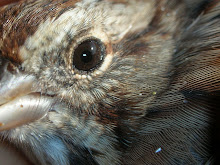
Of course, the local songbird population is also fond of these sweet fruits. This female Common Yellowthroat, of the wood warbler family, foraged in the same bush.

I got this lucky shot some time later.

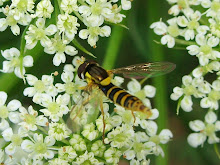
I try to keep a profusion of late summer and fall flowers available for the insects. These flowering lettuce bushes would normally be a part of my seed saving regime, but we are going to start over with regionally appropriate seed varieties in our next garden, somewhere on the West coast, so these flowers are just for the bees. The last pollen producing flowers in the garden are the hardy broccoli flowers, I always leave the small side shoots to go to flower, they continue to bloom and attract bumble bees even after the ground starts to freeze, well into November, even early December.

A fennel flower, on it's way to seed, I hope. I started these fennel plants in March this year, determined to get some fennel seed from these slow-pokes, we'll see.

The last of the Coriander flowers, my absolute favorite flower in the garden, they make a delicate bouquet all of their own.


It's amazing that they become such homely clusters, which is likewise, one of my favorite spices. We're curry-aholics, and if you've never tried coriander in baked goods, replace it with cinnamon in a spiced cookie recipe for a nice delight.

24 August 2009

Fungal diseases in the garden

With the incredible rainfall we've had here in the east, there's been ample opportunity for fungal diseases in the garden. The late blight epidemic, affecting tomato and potato crops, is an example, although blight is not technically a fungus it responds to the same cool wet conditions. Fortunately, we have no signs of blight in our nightshade crops this year, which led me to ask the question why? What did we do right? In asking this question, I also did some research on a few new (to me) fungal diseases, and what led to their introduction into our garden.

As far as late blight is concerned, I believe the two most important measures of prevention were quality, uninfected seed, and rotation. I've saved my own tomato seed for three generations, and each year I follow the method of fermenting the seed pulp before washing the seed and properly drying it for storage. The fermentation process promotes good germination, but it also destroys potential pathogens that can be harbored by the seed. Our potato seeds are put to the test by coming through a long storage period, proving that they are disease free.

Second to quality seed in disease prevention, is rotation. It is best to maintain a 2-3 year rotation of crops, and whenever you are introduced to a new disease in your garden, it is important to research the alternate hosts of this disease. It can be surprising to find dissimilar crops can host the same disease, and often weeds will harbor and spread disease. Along with rotation, it is necessary to remove any plant residue (leaves, stems, roots) from the garden and properly compost the material before returning it to the soil.

These two important factors certainly contributed to our garden's blight free status, despite the prevalence of blighted potato fields no more than 5 miles from us. Healthy plants will be able to withstand certain thresholds of disease, borne in on the wind and rain, so part of the story is plain good fortune that our crops did not succumb. But keeping the plants from contact with the soil can also prevent or suppress blight. So perhaps the layer of mulch we applied to the crops in mid-June hampered the incubation process, necessary to the spread of the disease.

I always thought of carrots as a rather trouble free crop, once they are thinned and weeded, they generally take care of themselves. We've had some damage from Carrot Root Fly (or Carrot Rust Fly), but again, rotation and fall cultivation is usually enough to keep their numbers under control. This year I have been introduced to a fungal disease that affects the carrot leaves, Alternaria Leaf Blight. It affects older crops, later in the season after the rows have closed in, reducing air flow. Like other fungi, it thrives in cool wet conditions. But where did it come from, how was it introduced to our garden?

Going back to my original statement, about the importance of quality seed, I realized that my first carrot seed saving venture was flawed. I had selected quality storage carrots to grow for seed last summer, but I had not read enough information about preventing the spread of disease through seed. Alternaria is most often transmitted through infected seed. And there is a simple method of treating seed to halt it's spread to the next crop. Many types of seeds, including the Cole family, lettuce, spinach, eggplant and nightshades, as well as carrots, can be treated in a hot water bath, for a specific length of time (see the table on this link for details). I have also read about using a hot water and cider vinegar solution, though it looks as though the temperature and length of exposure is the most effective measure of killing potential pathogens.

The Alternaria leaf blight does not much damage the crop, especially at the later stages when most of the growth is complete. For the most part, it is a problem for mechanical harvesters, as the stems break off easily, leaving roots in the ground. The most damaging effect of this fungus is that is promotes the spread of damping-off in the soil. And I do believe that my last planting of carrots was cut back by damping-off. This could lead to potential problems for direct seeded crops and young seedlings in the future.

Alternaria Leaf Blight of Carrots

Cereal crops have their own biosphere of diseases, including fungi, bacteria and viruses. Most of these disease cycles can be broken by planting non-cereal crops in rotation, but some vegetable and legume crops can host cereal diseases as well. Developing resistant seed in cereal crops is an important and active area of agricultural research. Research labs around the world are constantly responding to new mutations of cereal diseases, breeding crops with genetic resistance, and making these resistant varieties available to many Third World countries whose farmers do not depend on fungicides for healthy crops.

We bought our Vicar Hulless Oat seed from a small independent seed producer, the seed is an heirloom variety, and granted, there are few options for purchasing small quantities of cereal seeds in Canada, so we hoped for the best. The description of the seed said nothing of disease resistance, and in the future, that will be a requirement in my seed purchases. Our Hard Red Spring Wheat is a modern, disease-resistant cultivar, proven in our climate, and it has withstood the variety of cereal diseases this year. The Hulless Oats, on the other hand, are peppered with Septoria or Speckled Leaf Blotch, a fungal disease. It can easily spread to other cereal crops, so our healthy crop of wheat, only 20 feet from the infected oats, has given me first-hand evidence of the necessity of disease resistant cultivars.

Septoria or Speckled Leaf Blotch on Hulless Oats

18 August 2009

Growing small grains and seeds

We are growing some test plots of small grains and seeds in the garden this year. Mostly, these plots have taught me about the growing conditions of each crop, as well as the pests and diseases specific to each. We started with small seed packets last year, planting roughly a 3' X 3' bed of each grain or seed. The seeds saved from the first plot planted out about 500 row feet this year. Again we would be saving the seed, and would get some moderate harvests, along with enough seed to plant out a full sized crop to supply our needs for a year. That was the plan, of course, before we cemented our plans to move to the West coast next spring. It will be strange, and in some ways wonderful, to not be growing a garden next year, a sabbatical of sorts.

Back to the grains, this year we planted 200' of popcorn (I've found that it makes a nice cornmeal as well as a popping corn); 100' of sunflower (we will be lucky to harvest any seed this year, still no flowers); 300' of amaranth (good mixed with cereals, and we are going to try it as a sprouting grain for winter); 500 row feet of millet (a good rice substitute); 500' of quinoa (an excellent protein and good flavored rice substitute); poppy seed here and there (the cutworms really got to them, so I kept re-planting wherever we had the space); 500' of hulless oats; 250' dry peas; 350' baking beans.

The cutworms preferred the amaranth, quinoa and poppies over the cereals like oats, millet or popcorn, so they may deserve some protection if cutworms are a problem. The next time we grow these grains I would plant them in different soils, in a separate rotation. The cereal type grains (oats, millet, wheat) can be planted in newer ground, with few amendments, such as after turning in a cover crop. Dry peas and baking beans can be treated this way as well, although they do benefit from working a light layer of compost into the soil. The vegetable type grains (amaranth, quinoa, poppy) require fertile loose soil, with a high compost and humus content, and would benefit from the higher water retention in this class of soil as well. Popcorn and sunflower are heavy feeders and require rich composted soil as well.
Golden Amaranth. The grains seeds are the size of sesame seeds with a high protein content of 16%. I am also testing each of these grains as possible feed grains for livestock, so the high protein grains are attractive. Amaranth greens can be eaten as a cooked vegetable when young, so plant thick, and thin the plants out to about 2' spacing (livestock will love the thinnings as well). This variety can reach 6-8' high. The seeds are good cooked in porridge, added to granola, added to breads or baked goods, and can be popped as a snack, or sprouted.
Proso Millet. 12-14% protein content. Good potential for chicken feed, the seed heads are easy to harvest, and can be fed out whole, no milling or threshing required. We also enjoy cooked millet as a rice substitute, often using it in casseroles, or as a base under vegetables or curries. Highly drought tolerant, and ripens quickly in short seasons.

Red Quinoa. At least 16% protein, and a whole protein at that, with all of the amino acids our body requires. It can be tricky to grow, seems to be more susceptible to drought, rust and aphids, and does not have the hardy characteristics of it's cousin Lamb's Quarters, which seems to thrive just about anywhere. It is also a longer season grain, and light frost will burn and kill seedheads.
Vicar Hulless Oats. Easy to grow and thresh for use in the kitchen. Similar growing requirements to regular feed type oats. We chose a heirloom variety, but it is not showing high resistance to rust, so in the future we would choose a more resistant modern variety. Only a few plants are as blighted as these ones, most of the crop will mature despite the rusted leaves, but it is not good practice to allow rust to develop in our garden as it will jeopardize our wheat crop. If we were staying for another season, we would most likely have pulled up all of the rusted plants and removed them from the garden.

"Popcorn" popcorn. Easy to grow, these plants only reach about 3' high, and produce 2-3 6" cobs. The cobs dry quickly in the ears, needing only a few weeks of extra drying time after harvest in northern climates.

But they do need protection from the European Corn Borer. I would like to try putting mesh bags over each ear, in the early stages of development, to prevent the maggot from damaging the kernels. Left as they are, with the biological controls of natural predators, they take about 10% of my crop.
St. Hubert Dry Peas. Well worth growing your own split peas if you have the room. They dry quickly in the pod, and thresh out with ease. These grain peas cook down to a delicately flavored puree, as you would expect from split peas. They can also be ground into a high protein flour. Cracked, they would make an excellent livestock feed at 22-24% protein.
The Pea Moth is the main pest of our pea crops, but they seem to prefer the higher sugar content of the shelling peas, and generally leave the dry peas alone. The dry peas are also more resistant to mildews, because they seem to mature and dry out before the long-fruiting shelling types.

Jacob's Cattle Baking Beans. A decent bush type baking bean. It's not the highest yielding type, but the beans are very good, smooth and flavorful.


Mauve-Flowered Poppy. I snuck a row of poppy seeds in with my flower and herb beds, where a cutworm fence protected them. The flowers are mostly done now, as the cosmos take over blooming. Poppy seed is easy to grow and easy to harvest and thresh, each plant produces 4-6 poppy flowers/seedheads. They dry out well within our short season, but must be watched for mildew in early autumn heavy rains. The stalks tend to fall over and could benefit from trellising or fencing.

Some grains and seeds we did not get around to trying include sesame seed, flax seed, chickpeas, soybeans and lentils. These can also be easily grown in the garden, and harvested for the pantry without the need of specialized machinery or milling.

23 July 2009

Growing by degrees

The food cycle has finally reversed flow, there is more food coming into the house than we are able to eat... time to stock the pantry. Without a greenhouse, our stored food supplies need to last until the third week of July. It can be a struggle, and usually means relying on spring greens, grains, eggs and dairy for the better part of June and July after the last of the root crops and potatoes. And I always put away more than enough canned green beans to cover the gaps before those first glorious snow peas are ready in early July.

Although we planted each of these crops about three weeks earlier than last year, our first harvests are no more than a week to a few days earlier. I, of course, had my hopes up for a logical three-week-earlier harvest. But every season is unique. In doing some research, I happened across the phrase "Growing Degree Days". It is a unit used to measure or predict the first bloom or maturity of a crop, or the emergence of an insect or pest. Temperature is one of the most crucial elements in crop growth, and generally triggers most of the cycles of the insect world. And we have had an abnormally cool June and July. Especially July. Our nights have averaged at 10C (50F) instead of the normal 16-18C (60-65F). Only a few crops will continue to thrive with these nighttime lows, such as peas and Cole crops. Roots, onions and potatoes slowed down. And heat lovers: beans, tomatoes, peppers, squash and cucumbers just hung around, waiting.

Growing Degree Days can easily be calculated (go to the link above at Wikipedia), by keeping track of the maximum and minimum temperatures, which I have been doing for years, in my garden records. Each crop or insect has a cumulative requirement of heat, or Growing Degree Units to flower, reach maturity or hatch out. It will be interesting to use this unit in the future, to calculate and predict crop maturity or expected pest emergence, in an ever changing climate.


According to planting dates, we should have had our first new potatoes July 1st, instead of July 22nd, which shows that the cool weather set back the growing season by three weeks. Quite significant. But our first taste of potatoes, since the last wrinkled-ones in mid-June, was well worth the wait: Yukons, one large golden potato snuck out from each plant in a row. Boy they taste good. It's kind of a nice break, not eating potatoes in the gap between the last wrinkled, sprouting aliens, and the new, apple-crisp crop. Like cleaning the palette. After all, we do eat our share of potatoes over the winter. And come June we have an abundance of eggs so I can make all of the pasta I dreamed of making in the winter egg-drought.

Likewise, there is nothing like that first sun-warmed tomato... We savored, half each, on a bed of lettuce and snow peas, with a yogurt-dill-cilantro dressing.
Broccoli won't be far behind... I usually can't resist snapping off the first head and eating it right there in the garden.

The larger carrots can be selectively pulled from the row, making room and giving sunlight to the stragglers from replanting the gaps. I couldn't resist pulling a few early parsnips to go with the feast. The smell of freshly pulled parsnip roots and leaves reminds me of coconut. Didn't have any coconut milk in the house, but this is what the aroma inspired: carrots and parsnips sliced, steamed, cooked in butter, with chopped mint, peppermint and finely chopped dates. New favorite.


Our last carrot planting was later than usual, after the cutworms marched through, taking two May re-plantings with them, I was too discouraged to plant again, until after we put the cutworm fence around the fallowed, cutworm free plot. The first week of July started with a flood and ended with a drought, I planted the carrots between 1" rains, and then the weather turned hot and dry, forming a crust on the surface of the soil. Larger seeds would not be worried by this, but tender carrot seedlings can really struggle with obstructions. And the heat was to continue for a week, so I experimented with laying a fine layer of hay over the beds, aiming for 50% coverage, like shade-cloth, to bring the soil moisture back to the surface and soften the soil, allowing the seeds easy emergence.

It worked beautifully, the carrots poked up between the mulch, and it has worked to suppress some of the early weeds. As the crop emerges, I gently part the mulch and concentrate it between the rows to further suppress weeds.

13 March 2009

Unfurling their leaves like banners

It's that time of year for us. The sun is high in the sky, and the season is upon us, even if there is still three feet of snow on the ground, and -20C last night! I love watching the seedlings elbow up out of the soil. It is such a hopeful time of year. It is especially gratifying as I do more of my own seed saving. I am really impressed with the germination rate of my tomato and tomatillo seeds, just about all of them started nosing up on the morning of the 6th day.

I've yet to successfully save my own brassica seeds. There's a cabbage in cold storage to put back in the ground this spring, and some Winterbor kale heavily mulched under the snow, and I am just plain determined to beat the frost this year for some broccoli seeds. The red cabbage on the right is seed from 2005, they are a bit reluctant to wake up, time for some new seed.
These are our own spinach and lettuce seeds, and they came rocketing out of the soil on the 3rd day after planting, some of them got a bit leggy, they grow so fast! We don't use any lights for seed starting, so they get germinated behind the wood stove, and the moved up into the bay window we built for the seedlings. But some of the lettuces got up so fast, and I was still trying to germinate the rest behind the stove. Nothing stops them from racing toward the light, lessons in determination and resilience.

01 January 2009

Wiping the slate clean

So 2008's harvest is now removed from the sidebar, and I've posted it here for posterity. May the new growing season be more bountiful than the last.

Vegetables Harvested 2008
Beets 36.5 lb
Broad Beans 6.5 lb
Broccoli heads 1.5lb
Brussels Sprouts 2.5 lb
Cabbage 9 lb
Carrots 400 lb
Cauliflower 5 lb
Cucumber (slicing) 42 lb
Cucumber (pickling) 70.25 lb
Fennel bulbs 3 lb
Fresh Greens: unlimited (mesculun salad, spinach, chard, kale, fresh herbs). Roughly 4 lbs/ wk for 4 months
Green Beans 103.75 lb
Leek 3 lb
Onion 133.5 lb
Peas (shelled) 34 lb
Potatoes 661 lb
Pumpkin 154 lb
Squash 193 lb
Sweet Potato 52.5 lb
Tomatoes 183.5 lb
Turnip 43.5 lb
Watermelon just one 3 lb
Zucchini 35 lb

Staples 2008
Eggs 12 a day average
Butter 2 lb a week average
Whole milk 2 liters a day
Fresh cheese 3 lb a week average (plus whey for chickens)
Beef 100 lb
Chicken 44 lb
Bread wheat 300 lb
Rye for kitchen 30 lb
Split Peas 6 lb
Baking Beans 6.5 lb
Popcorn 3.75 lb
Pumpkin Seed 2 lb
Poppy Seed .5 lb
Rye 450 lb for feed
Oats 2000 lb for feed
Wheat 1000 lb for feed
Hay 250 bales clover and timothy
Mangles 200 lb
6 Cords Firewood

Wild Fruit 2008
Apples 650 lb
Blueberries 22 lb
Chokecherries 8 lb
Pin Cherries 6 lb

Herbs and Teas 2008
Alfalfa 200 g dried
Catnip 130 g dried
Comfrey 32 g dried
Mint 45 g dried
Mullein 20 g dried
Oregano 125 g dried
Red Clover 160 g dried
Sage 40 g dried
Scullcap 85 g dried
Thyme 40 g dried

Saved Seed 2008
Andover Parsnip: 55g
Aunt Molly's Ground Cherry: packet
Batchelor's Buttons: packet
Bloomsdale Spinach: 10g
Calendula: 20g
Carmen Sweet Pepper: packet
Cherry Fox Tomato: packet
Corriander: 20g
Dill: packet
Garden Sweet Cucumber: 10g
Giant Russian Sunflower: 60g
Green Windsor Broad Bean: 70g
Hulless Oats: 175g
Hungarian Hot Wax Pepper: packet
Jacob's Cattle Baking Bean: 600g
Latah Tomato: packet
Mauve Flowering Poppy Seed: 20g
Mesculun Lettuce Mix: packet
Naked Seeded Pumpkin: 90g
Pickles Cucumber: 10g
Popcorn: 275g
Potatoes (5 varities): 100 lbs
Proso Millet: 130g
Provider Green Bean: 500g
Roma Tomato: packet
Sage: packet of tiny seeds
Scarlet Nantes Carrot: 20g
St. Hubert Dry Peas: 150g
Sugar Baby Watermelon: 5g
Thompson Shelling Peas: 540g
Thyme: packet of tiny seeds
Toma Verde Tomatillo: packet
Wild Carraway: 10g
Yellow Plumb Tomato: packet

In the Pantry 2008
Applesauce 32 Quarts
Garden Tomato Sauce 12 Pints
Spicy Tomato Sauce 3 Quarts, 14 Half pints
Garlic and Pepper Tomato Sauce 15 Pints
Just Tomato Sauce 10 Half Pints
Tomato Apple Chutney 14 Pints
Apple Mint Butter 9 Pints
Beef Stock 15 Quarts
Beef 31 Quarts, 30 Pints
Chicken Stock 22 Quarts
Chicken 28 Pints, 5 Half pints
Bread and Butter Pickles 8 Quarts
Shelled Peas 3 Quarts, 25 Pints
Green Beans 41 Quarts, 10 Pints
Dried Apple Rings 2.5 lb
Dried Fruit Leather 3.75 lb
Dried Blueberries 2.5 lb
Dried Tomatoes .5 lb