We've got whopping big potatoes this year, must be all the rain. And even this pound-and-a-halfer had barely a spot of hollow heart in the middle, solid potato all the way through, and enough to fill the dinner plate!
And all the little ones...
 We're expecting a real Zero degree frost tonight, so the squash and pumpkins have been brought in to cure. We had a late crop, and there were a dozen or so of these little promising would-be squash. Not sure how much flavor they have, or how green they are, at best I'm hoping for something like zucchini. I figure I'll try them breaded and fried, after all, everything tastes good breaded and fried! If not, I'm sure the goats and chickens will make quick work of them.
We're expecting a real Zero degree frost tonight, so the squash and pumpkins have been brought in to cure. We had a late crop, and there were a dozen or so of these little promising would-be squash. Not sure how much flavor they have, or how green they are, at best I'm hoping for something like zucchini. I figure I'll try them breaded and fried, after all, everything tastes good breaded and fried! If not, I'm sure the goats and chickens will make quick work of them.All tucked in for the night...
 We put our peppers, tomatoes and ground cherries in one long bed so that we can cover them easily. We procured some heavy plastic house-wrap from a mini-house mover. He usually has to pay to take it to the dump, so he's always keen to pass it along. It is very heavy duty plastic, we have also used it as the weather-proof layer to our board and baton barn roofs, and it has out-performed anything we have purchased. At least it's diverted from the waste-stream, it's hard to believe that plastic this heavy, with so much potential for re-use, is trashed after a single use.
We put our peppers, tomatoes and ground cherries in one long bed so that we can cover them easily. We procured some heavy plastic house-wrap from a mini-house mover. He usually has to pay to take it to the dump, so he's always keen to pass it along. It is very heavy duty plastic, we have also used it as the weather-proof layer to our board and baton barn roofs, and it has out-performed anything we have purchased. At least it's diverted from the waste-stream, it's hard to believe that plastic this heavy, with so much potential for re-use, is trashed after a single use.

 The sunflowers have indeed bloomed in time to make seeds, I always forget how frost hardy they are. We are going to experiment with de-hulling the seeds this fall/winter.
 The
The  A late summer fruit,
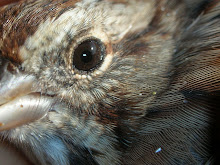
  Of course, the local songbird population is also fond of these sweet fruits. This female Common Yellowthroat, of the wood warbler family, foraged in the same bush.
 I got this lucky shot some time later.
 I try to keep a profusion of late summer and fall flowers available for the insects. These flowering lettuce bushes would normally be a part of my seed saving regime, but we are going to start over with regionally appropriate seed varieties in our next garden, somewhere on the West coast, so these flowers are just for the bees. The last pollen producing flowers in the garden are the hardy broccoli flowers, I always leave the small side shoots to go to flower, they continue to bloom and attract bumble bees even after the ground starts to freeze, well into November, even early December.
 A fennel flower, on it's way to seed, I hope. I started these fennel plants in March this year, determined to get some fennel seed from these slow-pokes, we'll see.


 Cosmos just starting to bloom
  Squash patch
 Green survivors
 Just the tips of the peppers burnt under a plastic hoop house
 I was surprised that the cauliflower leaves got frost burn, not the broccoli, cabbage or brussel sprouts though.
 Even my lemon balm got a little burned, now that's cold!


.JPG)